Student movements have long been a catalyst for change in India, often serving as the conscience of the nation during critical junctures. These movements have not only shaped education policy but have also influenced broader political discourse, demonstrating the power of young voices in a democracy. From the 1960s to recent years, several student-led agitations have left indelible marks on India's socio-political landscape.
The Anti-Hindi Agitation in Tamil Nadu (1965)
One of the most significant student movements in independent India erupted in Tamil Nadu in 1965, when the Union government attempted to make Hindi the sole official language. Students across the state protested vehemently against what they perceived as linguistic imperialism, fearing it would marginalize non-Hindi speakers and disadvantage them in employment and education.
The movement saw widespread participation from college students who organized protests, demonstrations, and strikes. The agitation turned violent in several instances, with protesters resorting to self-immolation to emphasize their demands. The movement ultimately forced the central government to reconsider its language policy, leading to the continuation of English as an associate official language alongside Hindi. This movement significantly strengthened regional identity politics and contributed to the rise of Dravidian parties in Tamil Nadu.
The JP Movement and Student Participation (1974-75)
The movement led by Jayaprakash Narayan against corruption and for total revolution saw massive student participation, particularly in Bihar and Gujarat. Students became the foot soldiers of this movement, which began with protests against rising prices and corruption in state governments but eventually challenged the central government itself.
University students boycotted classes, organized rallies, and mobilized communities. Their activism was instrumental in bringing national attention to issues of governance and democratic rights. The movement's intensity contributed to the declaration of Emergency in 1975, a dark period in Indian democracy, but it also planted seeds for political change that materialized in the 1977 elections.
The Mandal Commission Protests (1990)
When the V.P. Singh government announced the implementation of the Mandal Commission recommendations for reservations in government jobs, students from upper-caste backgrounds launched widespread protests. These demonstrations, concentrated in urban areas and elite educational institutions, represented a significant moment in India's ongoing debate over affirmative action.
While the movement failed to prevent implementation, it brought caste-based reservation policies to the forefront of national discourse. The protests highlighted deep social divisions and sparked conversations about merit, equality, and social justice that continue today. The movement also demonstrated how education policy intersects with broader questions of social equity.
The Fee Hike Protests at FTII and Other Institutions (2015-16)
The Film and Television Institute of India witnessed a prolonged student strike in 2015 against the appointment of a new chairman and broader concerns about government interference in autonomous institutions. This movement resonated with students across premier institutions who were simultaneously protesting against fee hikes and perceived attacks on institutional autonomy.
Students at the University of Hyderabad, JNU, and other campuses raised concerns about accessibility of education, freedom of expression, and the commercialization of higher education. These protests brought attention to issues of affordability and inclusivity in Indian higher education, sparking national debates about the government's role in funding public universities.
The Anti-CAA Protests at Universities (2019-20)
Student-led protests against the Citizenship Amendment Act emerged as one of the most widespread movements in recent years. Beginning at Jamia Millia Islamia and Aligarh Muslim University, the protests spread to campuses nationwide, with students questioning the legislation's compatibility with constitutional values.
The movement saw innovative forms of protest, including reading of the constitutional preamble, cultural performances, and sustained sit-ins. Students at these protests articulated concerns about citizenship, secularism, and democratic rights, bringing national and international attention to these issues. The movement demonstrated the continued relevance of student activism in contemporary India.
The Legacy and Impact
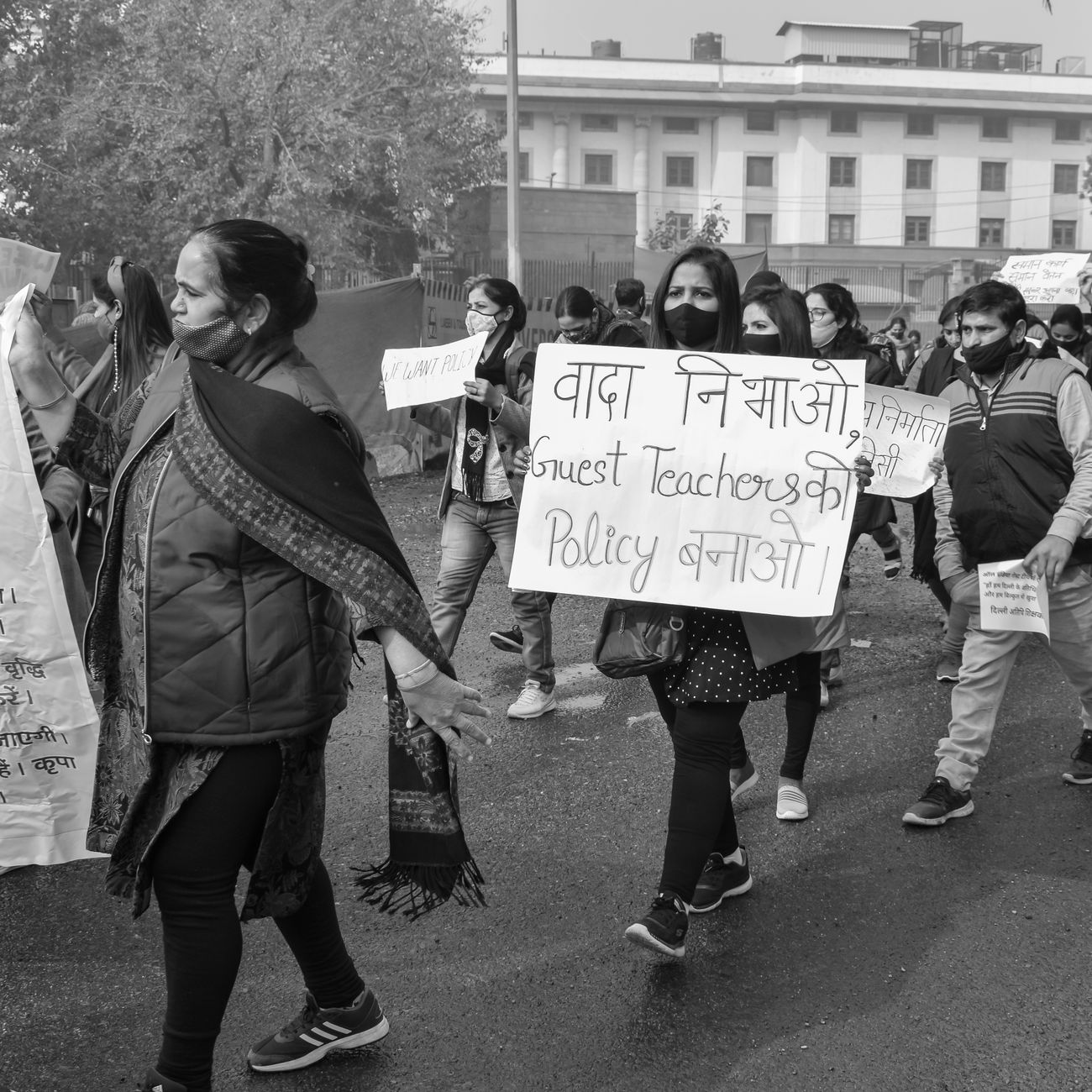
These movements collectively demonstrate how student activism has served as a barometer for social and political tensions in India. They have influenced language policy, reservation frameworks, education financing, and national legislation. Student movements continue to play a crucial role in holding governments accountable and advocating for inclusive, accessible, and quality education.
The tradition of student activism remains vital to Indian democracy, reminding us that young citizens are not merely recipients of education but active participants in shaping the nation's future.